
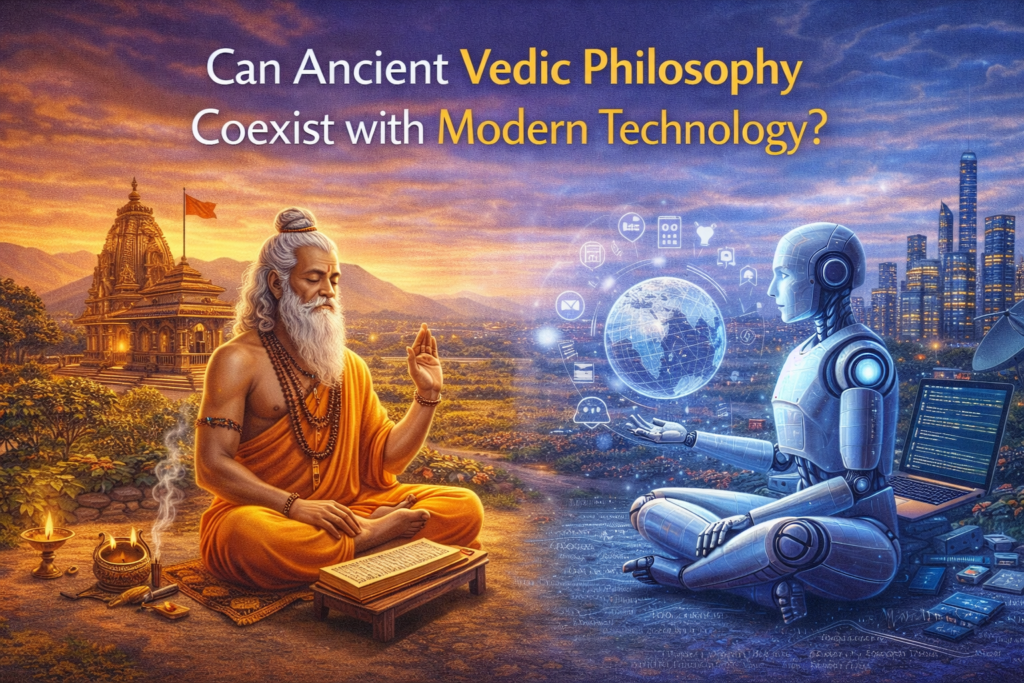
Can Ancient Vedic Philosophy Coexist with Modern Technology?
In today’s fast-paced digital world—dominated by artificial intelligence, automation, and constant connectivity—a profound question arises:
Can ancient Vedic philosophy coexist with modern technology?
At first glance, the two may seem opposites. One represents timeless spiritual wisdom; the other symbolizes rapid innovation and material progress. However, when examined deeply, we discover that Vedic philosophy and modern technology are not enemies—they can be powerful allies.
Understanding Ancient Vedic Philosophy
Vedic philosophy, rooted in the Vedas and Upanishads, emphasizes:
Dharma (righteous living)
Karma (action and consequence)
Satya (truth)
Ahimsa (non-violence)
Self-realization and inner balance
It focuses not merely on rituals, but on understanding consciousness, ethics, harmony with nature, and purposeful living.
The Vedic worldview teaches balance between:
Material progress
Spiritual growth
Social responsibility
What Modern Technology Represents
Modern technology symbolizes:
Innovation
Efficiency
Connectivity
Artificial Intelligence
Digital transformation
Technology improves convenience, productivity, healthcare, communication, and global collaboration.
However, technology without ethical grounding can lead to:
Stress and burnout
Environmental imbalance
Social isolation
Ethical dilemmas
This is where Vedic wisdom becomes relevant.
Not Opposites—But Complementary Forces
1. Technology as a Tool, Not a Master
Vedic philosophy teaches that tools should serve humanity—not control it.
Technology, when used with awareness and purpose, aligns perfectly with Vedic values. The issue is not technology itself, but how consciously it is used.
2. Dharma in the Digital Age
Dharma means responsible action.
In modern terms, this can translate to:
Ethical AI development
Responsible social media usage
Sustainable innovation
Data privacy and integrity
Vedic principles provide a moral compass for technological growth.
3. Balance Between Material and Spiritual Life
The Vedas never rejected material prosperity. Instead, they emphasized balance.
In fact, the concept of Purusharthas includes:
Dharma (ethics)
Artha (wealth)
Kama (desires)
Moksha (liberation)
Technology supports Artha and Kama—but Dharma ensures they do not overpower life’s higher purpose.
Technology Supporting Vedic Wisdom
Interestingly, modern technology is helping spread ancient wisdom:
Online Vedic scriptures and teachings
Digital meditation apps
Virtual spiritual communities
AI-powered Sanskrit translation tools
E-learning platforms for Jyotish and Vastu
Technology has made Vedic knowledge globally accessible like never before.
Challenges in Coexistence
While coexistence is possible, challenges include:
Overdependence on devices
Reduced human interaction
Digital distraction
Loss of mindfulness
Vedic philosophy reminds us to cultivate:
Self-awareness
Moderation
Inner stillness
These qualities help maintain harmony in a tech-driven world.
A Practical Way to Integrate Both
Here’s how modern individuals can balance both:
Practice meditation while working in tech fields
Use technology mindfully
Apply ethical principles in professional life
Maintain digital detox routines
Prioritize human relationships over screens
This integration leads to holistic success.
The Future: Conscious Technology
The future may not be about choosing between ancient wisdom and innovation—but combining them.
Imagine:
AI guided by ethical frameworks
Smart cities built on sustainable principles
Businesses driven by Dharma
Digital platforms promoting well-being
This is where Vedic thought can shape the future of technology.
Final Thoughts
So, can ancient Vedic philosophy coexist with modern technology?
Yes—if technology is guided by wisdom.
Vedic philosophy provides the ethical and spiritual foundation, while modern technology offers tools for progress. Together, they can create a world that is not only advanced—but also conscious, balanced, and humane.
The real question is not whether they can coexist—but whether we are ready to integrate wisdom with innovation.